
"sour and bitter"
10000 article(s) found

Introduction to Fine Coffee--How to Taste Fine Coffee Sweet, Sour, Bitter, Salty What Flavors Fine Coffee Has
The above means that beginner players do not need to pay too much attention to subtle flavors and aromas. What do you need to focus on? My advice is to start with basic tastes: sour, sweet, bitter, salty. And it's both the consumer's and the baker's. However, this is undoubtedly a vicious circle. The final result will only raise the entry barrier for fine coffee and lose a large number of potential consumers in vain.

SCAA Coffee Flavor Wheel learns the sour, sweet, bitter and salty of coffee
What is the best overall taste, and what is the appropriate ratio of sour to bitter taste? these all need to be adjusted according to individual tastes. If they are cooked for others, beans should be selected according to the preferences of coffee drinkers. Change the hot water temperature, extraction time and grinding degree, to find the best value. The taste of coffee roasted from light to medium is low molecular weight and middle molecular weight.

Characteristics and varieties of various coffee beans
Blue Mountain: the sour, sweet and bitter taste are basically blended evenly. Pay special attention to 80% of the world's Blue Mountains are exported to Japan, so there are very few in China, and most coffee shops are fake or mixed. Pure Blue Mountain seldom has mochas: 1 ax 3 concentrate, 1 pm 3 hot chocolate, 1 pm 3 milk foam, and finally sprinkle with chocolate powder. Mocha coffee beans have a soft sour taste, but they are washed by many coffee shops.

What is the relationship between coffee sour, sweet, salty and bitter and roasting-an introduction to the blending of Italian coffee
What is the relationship between coffee sour, sweet, salty and bitter and roasting-espresso blending introduces the bitterness of ① moderate roasting (chlorogenic acid lactone) and ② deep baking bitterness (vinyl catechol oligomer). ① is the so-called authentic bitterness of coffee; ② is the bitterness of deep-roasted coffee such as espresso. Therefore, medium and deep baking is an intermediate flavor between ① and ②.
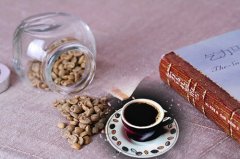
The types of coffee Blue Mountain Coffee Java Coffee
The type of coffee Japanese charcoal roast coffee: pure re-accompany created the unique taste of Japanese charcoal roast, Xiangchun bitter, more to maintain the original flavor of coffee. Hawaiian coffee: with a strong sour taste and unique aroma, moderately roasted beans with a strong sour taste, deep-baked flavor please climb to a higher floor. Bitter coffee: no sugar and no company, boiled coffee has a strong aroma

Coffee general knowledge of all kinds of fancy coffee
Japanese charcoal roasted coffee: pure re-accompany has created the unique taste of Japanese charcoal roast. Xiangchun is bitter and astringent, and most of them maintain the original flavor of coffee. Hawaiian coffee: with a strong sour taste and unique aroma, moderately roasted beans with a strong sour taste, deep-baked flavor please climb to a higher floor. Bitter coffee: no sugar and no company, boiled coffee has a strong flavor, but the most
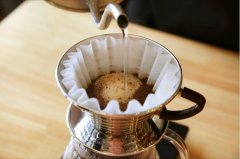
Why is my coffee sour?
Coffee itself is sour, ah, in general, the PH value of coffee seems to be around 4. If you drink black coffee, the sour taste is more obvious. Maybe your partner doesn't add enough milk, adding more milk will taste slippery and better than your partner. If you like sweet, add sugar. Usually I don't add sugar, that is, black coffee and milk. Nestle coffee is roasted at high temperature and has a scorched taste, wheat.

Introduction to the types and characteristics of Coffee Grinding degree of Italian Coffee
Blue Mountain Coffee: originated in Jamaica, named after the Blue Mountains surrounded by the Caribbean Sea. Sour, sweet, bitter taste are very harmonious and have excellent flavor and aroma, suitable for individual coffee, suitable for moderate roasting. Java coffee: Origin: Sumatra, Indonesia. It belongs to Arabica. After baking, the bitter taste is extremely strong and the aroma is very light, without sour taste. Conna Coffee: Origin: Hawaii

What's a good cup of coffee like?
Following Cafe Review (official Wechat account vdailycom) found that the basic taste of bitter coffee opened in Beautiful Cafe is the strength of bitter taste and the texture of bitter taste. Raw beans contain only a tiny amount of bitter taste, followed by baked sugar, part of starch, caramel and carbonization of fiber, which produce the most symbolic bitterness of coffee. And the bitter ingredient

What are the different kinds of coffee?
Java coffee: Origin: Sumatra, Indonesia. It belongs to Arabica. After baking, the bitter taste is extremely strong and the aroma is very light, without sour taste. Conna Coffee: Origin: Connor area, Hawaii. The coffee beans cultivated by volcanic lava have a slightly wine aroma and a very unique flavor. . Santos Coffee: mainly produces Brazil, Sao Paulo. Sweet, sour and bitter are neutral and have moderate acid.
Is iced American coffee sour and bitter? How can I make iced American coffee? What does a cup of iced American coffee imply?
Iced American coffee tastes sour. What's going on? A friend asked me: the iced American coffee usually drank at Starbucks is carbonized flavor, a very bitter cup of coffee, how to drink ice American coffee in a boutique cafe, unexpectedly sweet and sour, can not be added anything? Today, I'm going to show you.

Introduction to the types and flavor characteristics of coffee Italian semi-automatic coffee machine
Blue Mountain Coffee: originated in Jamaica, named after the Blue Mountains surrounded by the Caribbean Sea. Sour, sweet, bitter taste are very harmonious and have excellent flavor and aroma, suitable for individual coffee, suitable for moderate roasting. Java coffee: Origin: Sumatra, Indonesia. It belongs to Arabica. After baking, the bitter taste is extremely strong and the aroma is very light, without sour taste. Conna Coffee: Origin: Hawaii

Coffee extracted by SCAA Gold Cup identifies the distribution of sour, sweet, bitter and salty on the tip of the tongue
Since the data is not important, what is important? The effect of extraction rate on taste, of course. When you have a thorough understanding of the relationship between the extraction rate and the taste trend, it will definitely be of great help to your cooking adjustment. Let's take a look at this diagram. The data of vertical axis and horizontal axis are removed and replaced by the relationship between concentration taste and extraction rate taste. When coffee

Whether the coffee is sour or bitter is recommended for coffee beans that are sour and delicious.
When you come to a cafe to order a cup of coffee, guests may wonder whether the cup of coffee is sour or bitter. In fact, for guests who know what they like, the bitter choice is not so difficult, as long as it suits their own taste for a long time. In the front street coffee, if you like sour coffee, you can choose Yegashifi beans from Ethiopia or Kenyan coffee.

Relationship between Fine Coffee Taste and extraction conditions
Coffee is the art of pursuing balance, the extraction law of coffee taste from sour to bitter: 1, shallow roasting (acid) to deep roasting (bitter) 2, rough grinding (sour) to fine grinding (bitter) 3, coffee powder less (acid) to more (bitter) 4, water temperature low (acid) to high water temperature (bitter) 5, extraction speed fast (acid) to slow (bitter) 6, more extraction (acid) to less extraction (bitter).

Coffee beans introduced species and varieties of countries
Blue Mountain Coffee: sour, sweet, bitter taste are very harmonious and have excellent flavor and aroma, suitable for individual coffee, suitable for moderate roasting. Hawaiian coffee: with a strong sour taste and unique aroma, moderately roasted beans with a strong sour taste, deep-baked flavor please climb to a higher floor. Brazilian coffee: sour and bitter can be mixed by baking, moderate roasting soft flavor, taste
Can the sour and bitter of coffee be regulated? Do you have coffee that is not bitter or sour? How to avoid bitter coffee
In fact, the bitterness and sour in coffee are the inherent characteristics of coffee, but also its symbol. Indeed, sometimes the coffee doesn't taste as much as we want, the sharp acidity can't be ignored, and sometimes the coffee tastes bitter and unpleasant. So what causes these unpleasant smells is baking? Or extract? Or the raw bean itself? The answer is actually all three.
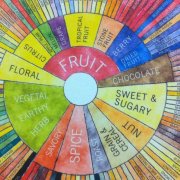
Learning essentials of SCAA Coffee Flavor Wheel the origin of coffee flavor wheel
Coffee has only four kinds of water-soluble tastes: sour, sweet, bitter and salty, some sour and sweet, only volatile, which need to be identified by smell; some are non-volatile, only water-soluble, and need to be identified by taste buds; and some sweet and sour ingredients are both volatile and water-soluble, so sour and sweet often show the dual senses of smell and taste. As for bitterness and saltiness, there is no volatility.

Introduction to the baking characteristics of coffee beans in which month coffee trees bloom
1, shallow baking (Light) the most light fried culture, no flavor and concentration to speak of, beans are not yet ripe, with the green taste of raw beans, not suitable for grinding and drinking. It's usually used as an experiment. 2. Deep shallow baking (Cinnamon) is also known as cinnamon baking, which is generally popular and has a strong sour taste. The color of beans is quite similar to that of cinnamon, so it is also called cinnamon baking, sour.

The main varieties and characteristics of basic Coffee
Blue Mountain Coffee: produced in Jamaica, slightly sour, supple, with sweet, delicate flavor, light taste. Columbia: produced in South America, slightly sour glycol, supple aroma alcohol, slightly to medium acid. Brazilian coffee: produced in South America, neutral, medium bitter, strong aroma, slightly sour, slightly bitter, introverted. Manning: from Indonesia and Sumatra. Bitter and mellow, fragrant and bitter. Mocha: produced in clothing